The following figure shows the relational model of the configuration database from the Central's point of view. Compared to the model seen by SGCom, it is enhanced by an SGCom entity, which allows data collection from many meters to be distributed among multiple instances of the SGCom application. The meaning of individual entities is described in the following subsections.
Commonly used entity attributes:
- id – artificial primary key
- name – the text name of the entity, intended for better orientation, has no application meaning for SGCom
- idParentEntity - an attribute with a similar name represents a foreign key that refers an entity to its parent entity whose name is prefixed by "id"
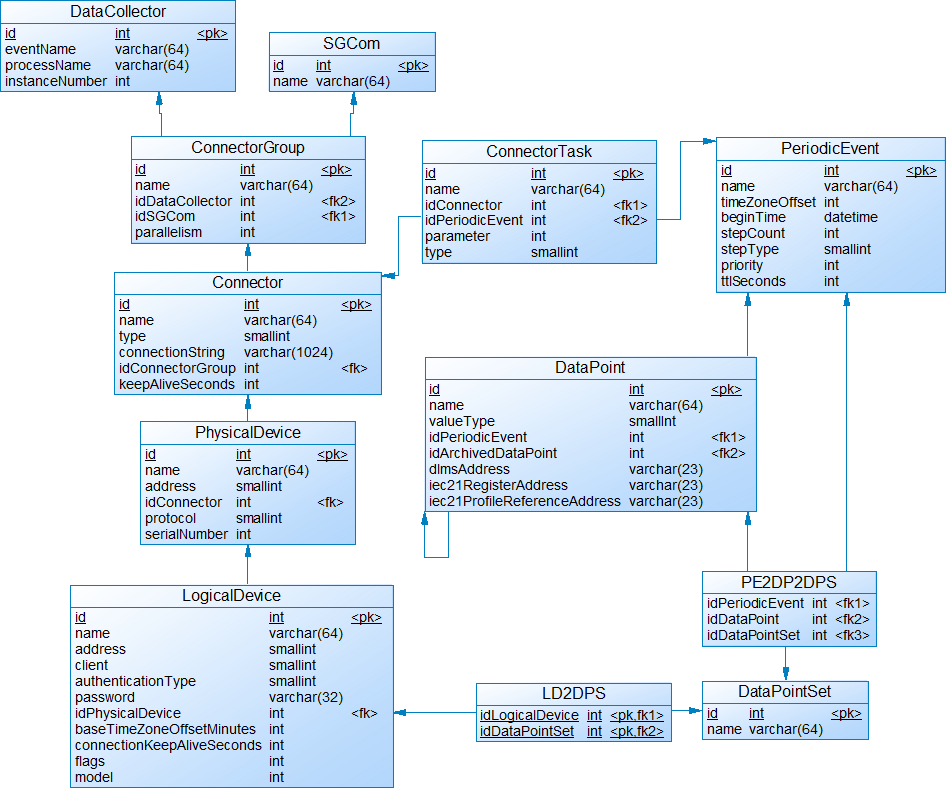
Figure 2 - Relational configuration database model
SGCom entity
Represents an instance of the SGCom application. At its start, each instance logs into the metering central with its own name, which corresponds to the name attribute. Accordingly, the metering central sends it the appropriate subset of the configuration database.
DataCollector entity, SD.SGC_DataCollector structure definition
Represents an instance of an Event object that implements the I.SGC_DataCollector ESL interface. Here, SGCom will transfer the collected data from the meters according to the selected time schedule. The metering central can contain several instances of "DataCollectors" due to load scaling.
Attributes:
- eventName – the name of the D2000 object of type Event
- processName – the name of the process on which the corresponding instance is executed
- instanceNumber – Event instance number (default value is 0).
ConnectorGroup entity, SD.SGC_ConnectorGroup structure definition
It groups Connector entities into logical units for the purpose of controlling the number of parallel serviced connections in a given group.
Attributes:
- parallelism – defines the maximum number of connections handled in parallel (Connector) in a given group.
Connector entity, SD.SGC_Connector structure definition
It contains the configuration of the communication line to one meter or a group of meters. It is similar to D2000 objects of type Line. During data collection, one Connector type entity is assigned at most one thread, which sequentially serves individual meters connected by a given communication line.
Attributes:
- type - The type of communication medium and protocol. A numeric type whose values are defined in the SGC_ConnectorType status text. It can acquire values:
- tcp – communication is transmitted via TCP/IP
- serial – communication is transmitted through the computer's serial port
- udpAddax – communication is transmitted via UDP/IP – the reverse mode of Addax electricity meters
- udpMoxa - UDP/IP is translated by the serial server device to the serial line and back
- connectionString - the address to connect to the meter. According to the physical connection type:
- tcp - host.name.or.ip.address:port (e.g. 192.168.1.222:12211) - consists of the IP address or domain name (192.168.1.222) and the TCP port number (12211) separated by a colon, on which the meter is waiting to accept TCP connection.
- serial - comPort baudRate (e.g. COM13 4800) - consists of the serial port name (COM13) and the baud rate (4800) separated by a space. (Other serial communication parameters are derived from the value of the type attribute.)
- udpAddax - deviceId@port (eg ADX115884@5025) - consists of a unique device ID (ADX115884) and a UDP port number (5025) on which SGCom waits for incoming UDP datagrams in which the meter announces its unique ID and its current IP address.
- udpMoxa - host.name.or.ip.address:port@localport (e.g. 172.16.22.22:4001@16001) - consists of the IP address or domain name (172.16.22.22) and the UDP port number on which serial server device communicates (4001) and local UDP port numbers (16001) to which serial server device sends UDP datagrams.
- keepAliveSeconds – the length of the time interval from the end of the connection with the last device on the line to the closing of the line. It is used for HDLC and IEC21 protocols and prevents unnecessary opening and closing of the line (e.g. COM port) during frequent tasks.
PhysicalDevice entity, SD.SGC_PhysicalDevice structure definition
It represents a physical measuring device See the DLMS/COSEM Green Book (chapter 3.1.20) according to the COSEM definition.
Attributes:
- protocol – the type of communication protocol of the relational layer. A numeric type whose values are defined in the SGC_ProtocolType status text. It can acquire values:
- hdlc – The HDLC protocol is used, through which DLMS/COSEM is transmitted.
- wrapper – IEC62056-47 (COSEM transport for IPv4) is used, through which DLMS/COSEM is transmitted. It cannot be used in combination with a serial line.
- iec21 – IEC62056-21 is used. It cannot be used in combination with UDP.
- address – HDLC address of the physical device. It is a value in the range 0 .. 0x3FFF. It is used for the HDLC protocol, it is ignored for other protocols.
- serialNumber – Serial number of the physical device. It is used for the IEC21protocol, it is ignored for other protocols.
LogicalDevice entity, SD.SGC_LogicalDevice structure definition
It represents a logical measuring device See the DLMS/COSEM Green Book (chapter 3.1.17) according to the COSEM definition. One physical device typically contains several logical devices, each of which fulfills a different purpose (measurement, management, in the case of combined meters, measurement of different media). However, usually only one logical device is of interest in an application. Together, the logical and corresponding physical device entities form the D2000 equivalent of a Station object.
Attributes:
- address – the address of the logical device. It typically has a value of 1, or takes on values from the range 1 .. 0x7F. The value is not used in the IEC62056-21 protocol.
- client - ID of the client connecting to the device. The value is not used in the IEC21 protocol. Specifies the user role to which the authorization type, password, and access rights to individual COSEM objects in the logical device are bound. It takes on values in the range 1 .. 0x7F, while the value 0x10 is used from the definition of the DLMS protocol for public access without a password with the right to read measured quantities.
- authenticationType - authorization type, a numeric type whose values are defined in the SGC_AuthenticationType status text. It can acquire values:
- none – access without a password
- password – access with a shared password transmitted without encryption
- password – shared password. It is used only if authenticationType has the value password.
- baseTimezoneOffsetMinutes – basic (in winter time) offset of the time zone in which the electric meter works, relative to GMT in minutes. (E.g. for Central European time it takes the value 60).
- connectionKeepAliveSeconds – the length of the time interval from the last task performed on the device to the termination of the connection. If tasks follow more frequently, the connection is not closed.
ATTENTION: the parameter is applied only for the DLMS protocol. Any communication with the IEC21 protocol will automatically close all other open connections, even if they should still remain open according to this parameter. - flags – a numeric attribute interpreted as a bit field, where each bit is interpreted as a certain flag.
- bit 0 – The meter shows the time zone shift as the opposite value. (For example, electricity meters in the Iskra basic setting or electricity meters in the SSE-D report).
- bit 1 – HDLC connection establishment will start via the IEC21 protocol and subsequent protocol switching.
- bit 2 – The electricity meter does not use summer time.
- bit 3 – Recording of the entire communication in TRACE is activated for the electricity meter.
- bit 4 – Activates the sending of the F101 command when setting the time using the IEC21 protocol. Required for some EMH LZQJ electricity meters.
- bit 5 – Deactivates the IEC21 readout of T3 and TS pages, which are read automatically for EMH family electric meters.
- model – Defines the model of the electricity meter, a numeric type whose values are defined in the status text SGC_DeviceTypeModel. It can acquire values:
- Anonymous LN – an unspecified electricity meter that uses the "Logical Name Referencing Method".
- Anonymous SN - an unspecified electricity meter that uses the "Short Name Referencing Method".
- Addax NP73E
- EMH LZQJ-XC – modern EMH LZQJ with support for plug-in modules and DLMS/COSEM protocol
- Landis+Gyr ZMD405CT
- Spark MT880
- Spark MT382
- EMH LZQJ (no DLMS) – old EMH LZQJ model with only IEC 62056-21 communication capability.
- landisGyrZFD405CR44
- landisGyrZMD405CR44
- landisGyrZMD410AT21
- landisGyrZMD410CT44
- landisGyrZMQ202C
- emhLZQJ_XC_P2A4
- emhLZQJ_XC_P2A2
- emhLZQJ_XC_P2F4
- emhLZQJ_XC_S1E4
- emhLZQJ_XC_S5E4
- emhLZQJ_XC_S1A4
- emhLZQJ_XC_S5A4
- emhLZQJ_XC_S5F4
- emhPZQJ
- sanxing_S210
- emhNXT4
- metcomMCS301
PeriodicEvent entity, SD.SGC_PeriodicEvent structure definition
An entity defines a regularly recurring event. For each event, SGCom creates a separate entry in its task schedule, even if two events occur simultaneously. With one entity, it is possible to simultaneously plan regular data collection from meters and regular data transmission to the metering central.
Attributes:
- beginTime – the exact moment in time of the first occurrence of the event. It marks the edge of the period - e.g. 5th minute of every hour. In practice, it is set far into the past, but for testing purposes, it can be set to the near future, so that the task only starts executing after the test environment has "warmed up".
- stepType - indicates the units in which the size of the time step with which the event repeats is expressed. It is a numeric type whose values are enumerated by the SGC_StepType status text. It can acquire the following values:
- second – one second
- day – one calendar day, while 23 and 25-hour days are also taken into account when changing to summer/winter time. The date and time of the change is determined by the time zone.
- month – one calendar month that has 28 to 31 days.
- stepCount - time step size expressed in units defined by the stepType attribute.
- timeZoneOffset - time zone designation as an offset from GMT in minutes.
- priority – priority of regular data collection according to this entity. A positive number, with a value of 1 representing the highest priority.
- ttlSeconds - The maximum time allowed for how long a periodic collection job can wait for its service in the job queue.
For example, an entity with attribute values beginTime = 7. III. 2017 12:00:15,000; stepType = second; stepCount = 900; timeZoneOffset = 60; will generate events: 7. III. 2017 12:00:15,000; 7. III. 2017 12:15:15,000; 7. III. 2017 12:30:15,000; ...
DataPoint entity, SD.SGC_DataPoint structure definition
The entity addresses a specific value that can be read or written to the meter during data collection. It is the D2000 equivalent of an I/O tag object.
Note: The following terms are used in the following text:
- The addressed COSEM object – its logical name (OBIS See DLMS/COSEM Blue Book (chapter 7) code) is the same as the value of the obis attribute.
- Referenced object – is addressed by the entity referenced by the idArchivedDataPoint attribute.
Attributes:
- valueType - the type of value in the meter, a numeric type, defined by the status text SGC_ValueType:
- registerScaledValue – the value of a Register object See DLMS/COSEM Blue Book (chapters 4.3.2, 4.3.3, 4.3.4), ExtendedRegister or DemandRegister. Contains immediate or the current value of one of the measured quantities (e.g. the instantaneous value of the voltage in the network, or the current value of consumption, etc.).
- archivedRegisterValue – the archived value of a Register, ExtendedRegister, or DemandRegister object in a ProfileGeneric object See. DLMS/COSEM Blue Book (chapter 4.3.6). It contains a time series of historical values.
- consumerDisconnectControlState – state of the DisconnectControl object. See DLMS/COSEM Blue Book (chapter 4.5.8). The object controls the disconnection and connection of the customer remotely (for example, in case of late payments for delivery). During regular data collection, the value of the immediate state (attribute control_state) is read from the object, during "immediate" reading on demand, the control mode is also read from the object (attribute control_mode).
- dataIntegerValue – integer value of the object. It is used to reference row flags in a profile.
- archivedIntegerValue - The archived value of an integer-valued object - typically a row flag in the profile.
- dataTextValue – the text value of the object.
- currentTimeValue – time value in the Clock object.
- idPeriodicEvent - an optional reference to the time schedule. If used, this value is collected regularly from the meter according to a defined schedule. If not used, the value can only be read on demand via an "immediate" task.
- idArchivedDataPoint - optional "back" reference. If used, indicates another DataPoint, modeling the archiving of the referenced instantaneous value in the meter to the addressed profile.
- dlmsAddress - object address written in the form of OBIS code. It is used when accessing an object via the DLMS protocol.
- iec21RegisterAddress – register object address written in the form of a reduced OBIS code. It is used when accessing an object via the IEC21 protocol.
- iec21ProfileReferenceAddress – the address of the register type object as referenced in the Profile type object when accessing via the IEC21 protocol.
Sometimes it is necessary to create multiple DataPoint entities that appear to address the same COSEM object. The following cases are typical:
- If it is necessary to read the archived values of several measured variables, while they are all archived by the same profile. For each archived quantity, an entity is created that addresses the profile but refers back to the entity that addresses the immediate value.
- If it is necessary to carry out regular data collection of the same quantity with a different period.
DataPointSet entity, SD.SGC_DataPointSet structure definition
It represents the grouping of measured quantities into a certain logical unit. In practice, it is a typified delivery point, characterized by a defined list of measurements on a defined type of meter.
PE2DP2DPS entity, SD.SGC_PE2DP2DPS structure definition
A binding entity that represents a ternary association between PeriodicEvent, DataPoint, and DataPointSet entities. The presence of this association expresses the inclusion of the DataPoint in the DataPointSet, while data transfer will take place with the period defined by PeriodicEvent. The presence of PeriodcEvent in the relationship is optional, if it is not present, data transfer does not take place.
ATTENTION: It is not allowed that the data transfer is not scheduled if the collection is scheduled - there would be a risk of overflowing the database. It is possible to schedule data transmission even when collection is not scheduled, but this creates an unnecessary communication burden.
LD2DPS entity, SD.SGC_LD2DPS structure definition
Binding class that assigns a group of measured variables to a logical device. The assigned sets do not necessarily have to be disjoint, duplicate links to DataPoints are eliminated during the processing of planned tasks.
ConnectorTask entity, SD.SGC_ConnectorTask structure definition
Represents a regularly recurring task related to the referenced Connector entity. The only implemented task is the prohibition of communication on the line in a defined time interval, which is used to secure time windows in a multi-master environment. For example, when there is a Scalar device in addition to SGCom on the shared serial line, and according to the agreement, SGCom can communicate every quarter of an hour from the 5th to the 10th minute.
Attributes:
- type – the type of regular task:
- noCommunication – prohibition of communication for the given Connector from the moment the task started for the time defined by the parameter value in seconds.
- parameter – an integer parameter, for a more precise task specification.